
Start here
Holvia documentation is built to help users understand the product quickly, navigate its core areas, and move from setup to confident usage without unnecessary friction.
Whether you are exploring Holvia for the first time or looking for a specific workflow, this documentation is meant to keep the experience clear, structured, and easy to follow.
Airdrop Eligibility Guide
Understand how wallet, socials, tasks, points, tiers, and qualification work.
Holvia Extension
Detailed documentation for the extension is coming soon.
Holvia Game
Understand the game section, structure, and product concepts.
Policies
Read our Privacy Policy, Terms & Conditions, and related legal information.
What is Holvia?
Holvia is a privacy-first platform for understanding, organizing, and acting on Web3 activity with more clarity.
Web3 usage often becomes fragmented across wallets, apps, chains, dashboards, research tabs, and scattered interfaces. Holvia is designed to reduce that fragmentation by giving users a more structured view of what they are doing, what happened, and what may require attention.
Instead of presenting activity as isolated transactions, Holvia focuses on context. It helps users understand:
- what happened
- why it matters
- whether any risk is involved
- what they may want to do next
This makes Holvia less like a passive dashboard and more like an interpretation layer for complex activity.
Why Holvia exists
Many users can interact with Web3 products, but still struggle to clearly understand their own behavior across tools, accounts, and networks.
Wallet history is often hard to read, permissions are easy to miss, and research becomes spread across too many places. As activity grows, visibility often gets worse instead of better.
Holvia exists to solve that clarity problem. Its purpose is to turn raw activity into something more understandable, more actionable, and more useful.
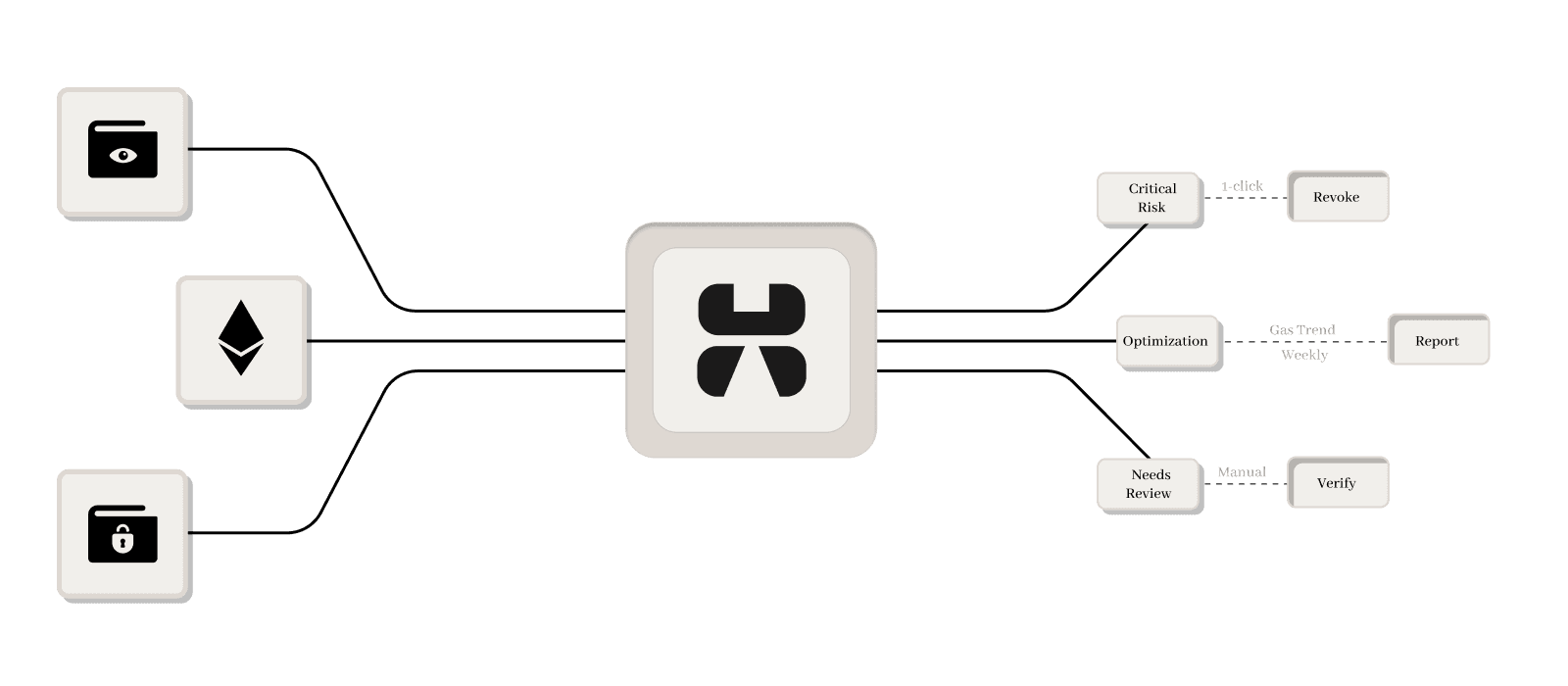
What Holvia is built for
Holvia is designed for practical day-to-day usage across Web3 workflows.
It helps users:
- understand activity across wallets, apps, and networks
- review behavior and usage patterns over time
- identify risky approvals, permissions, and actions
- simplify complex workflows with clearer explanation
- organize research and discovery into a more usable structure
- keep sensitive activity more private through local-first design
The goal is not only to display information, but to make that information useful.
Local-first by design
One of Holvia’s core ideas is that sensitive user activity should not need to leave the device just to become useful.
Holvia is built around a local-first model wherever possible. Personal activity can be processed on-device, giving users more control over visibility, interpretation, and sharing.
This matters for two reasons:
- Privacy — users should not have to expose unnecessary activity just to gain insight.
- Trust — products that interpret sensitive workflows should minimize how much data they depend on collecting.
Local-first design is not just a technical preference in Holvia. It is part of the product philosophy.
Core product ideas
Holvia is shaped around a few simple principles that define how the product should behave.
Clarity over noise
Web3 interfaces often expose too much raw detail and too little explanation. Holvia is built to reduce noise and increase understanding.
Privacy by default
Useful intelligence should not automatically require broad data exposure. Holvia is designed to preserve user control wherever possible.
Actionable safety
Security information only becomes useful when it is understandable. Holvia surfaces risk in ways that help users make decisions.
Who Holvia is for
Holvia is useful for a broad set of users who need more clarity in how they operate across Web3.
Everyday users
People who want a simpler way to understand what they signed, what changed, and what happened.
Active users
People managing multiple wallets, apps, and workflows who need clearer visibility across more complex activity.
Security-conscious users
People who want better visibility into approvals, risky permissions, and behavior that may deserve review.
Researchers and explorers
People who spend time reading, tracking, comparing, and organizing information across products and networks.
How to use this documentation
This documentation is structured to support both quick orientation and deeper product understanding.
You can use it to:
- get started with setup and first steps
- understand core product areas and workflows
- learn how Holvia approaches privacy, clarity, and safety
- find practical answers when you only need one specific section
If you are getting started with access, progression, or early participation, begin with Extension Whitelist & Airdrop Guide.
If you already know the basics, move directly into the section you want.
Documentation structure
The documentation is organized into clear sections so users can move from general understanding to specific workflows.
Extension Whitelist & Airdrop Guide
Covers access flow, participation steps, progression, and key whitelist or airdrop-related guidance.
Extension
Covers the browser extension experience, workflows, and key product behavior.
Game
Covers the game-related side of the ecosystem, including concepts and supporting documentation.
Policies
Covers Privacy Policy, Terms & Conditions, and essential support information.
Product principles
Across the platform, Holvia is guided by a few simple principles:
- make complex systems easier to understand
- keep privacy and user control at the center
- surface useful context, not only raw data
- help users act with more confidence
- build for clarity, safety, and repeatable workflows
These principles influence how Holvia explains activity, structures information, and decides what should stay simple.
Where to go next
If you are getting started with access or participation, continue to Extension Whitelist & Airdrop Guide.
If you want a broader product view, explore the Extension and Game sections.
If you are looking for legal information, go directly to Policies.